Wednesday, 15 June 2016

Mujadara-Stuffed Cabbage Rolls


If you haven't yet eaten mujadara, I'd suggest that you remedy that as soon as possible. It's a very simple dish, considered "peasant food" throughout the Middle East, but it's incredibly flavourful and filling and packed with protein from all the lentils. I once had a large bowl left over after a rather sizeable get-together, and used it to stuff cabbage rolls on a whim. Let's just say that it's one of my better impromptu culinary experiments, and one that I'm happy to share here.

During a time of mourning or shock, it's amazingly helpful to have food that can be prepared quickly and easily, and cabbage rolls fit that bill perfectly: they freeze well, and can be microwaved to readiness in just a couple of minutes, so a baking dish full of them can provide a good week's worth of meals.

This is a vegan recipe, and uses a tomato sauce that's spiced with cumin. The nightshade-free, AIP paleo version follows at the end of this post.

Prepping the Cabbage:

My Ukrainian grandmother used to boil heads of cabbage to make her rolls, but although that leaves you with a very fragrant stock that you can use for other recipes, it also makes your house stink of cabbage water for days, and the leaves get very fragile and break apart easily when you try to fill them. I now use the freezer technique instead, and can't recommend it highly enough:
You'll core your head of cabbage, then place it into a plastic bag and pop it into the freezer for 48 hours. It really needs to freeze solidly right to the center in order for the leaves to break down, and then you'll thaw it for a full day on your countertop before you can make the rolls. Needless to say, this is a dish that needs a few days' worth of advance thought and prep time, but is well worth the wait.

Once thawed, the leaves will peel away very easily, and you can drape them over a bowl or stack them in a strainer until you're ready to work with them. To fill them, first pick up one leaf and drape it right-side-downward over a bowl so its thick spine is facing upward. Take a small knife and pare down the spine so that it's almost as thin as the surrounding leaf: this will allow you to roll it much more easily, and will also help with cooking consistency.

NOTE: You will undoubtedly end up with some broken leaves here and there, and that's a good thing—you can use bits of these to patch minor tears inside some of the leaves you work with, and you can also drape them over the rolls before baking so they don't scorch/dry out.


Mujadara Filling Ingredients:
  • 1 large can of lentils, drained and rinsed
  • 4 cups water
  • 2 large Spanish onions (or more if you’d like this really onion-y)
  • 2 cups cooked long-grain rice (Basmati works well)
  • Olive oil
  • Salt
Preparation:

Heat the oil in large pan on medium-high heat, and add your onions. Bring the heat down a bit and caramelise them until they’re a deep, dark brown.

In a large bowl, combine your cooked rice, drained lentils, and browned onions. Season with salt and pepper and try not to eat the entire bowl by yourself.

Set this aside and allow it to cool before using it to fill your rolls.

Tomato Sauce:

This is a bit of an easy way out here, as the sauce you bake these in is really up to you. We tend to make big batches of basic sauce (just crushed tomatoes, onions, garlic, wine, tomato paste, and salt) and then freeze them for future use—once defrosted, the sauce can be augmented with various seasonings to suit the dish it's being added to.

For these Middle Eastern cabbage rolls, I add a bit of ground cumin, additional garlic powder, and a pinch each of sumac and chili pepper to a basic sauce so the seasonings are complementary. You can use canned pureed tomatoes and just doctor them a little bit until they taste right to you, or use a store-bought prepared sauce. It's your call.

Making the Rolls


Preheat your oven to 350F.

Take one of the cabbage leaves and cup it in the palm of your hand so that its base lines up with your wrist. Place a generous spoonful of filling about an inch inside, then roll the leaf: you'll start by folding the base inwards, then tucking in the sides as you continue rolling upwards.

Line a greased baking dish or lasagna pan with a few of the leftover leaves, and arrange the rolls on top of them as you finish rolling them. Once they're all in, pour your tomato sauce over the rolls until they're all just covered. If you have additional cabbage leaves left over, drape them over the rolls so they don't burn. If not, just add a little bit more sauce.


Cover the dish with aluminum foil, seal it as tightly as you can, and bake for 1 1/2 hours, or until the cabbage has cooked to a buttery softness: your knife should slide through it without much effort at all.

If you're serving these immediately, use a spatula and spoon to remove them gently, and serve hot. If you're going to be delivering them as comfort food, leave the rolls in the pan and allow them to cool completely before transporting them. Alternatively, you can also transfer them to a microwave-safe dish that the recipient can reheat easily.


AIP Paleo Variation:

For those of us who can't eat grains or legumes (...sigh...), these rolls can be stuffed with a variety of different fillings that are friendly to our individual food sensitivities. I often stuff mine with seasoned ground meat and riced cauliflower, or I make a version that the Sir and I can both eat by mixing the cauliflower with finely chopped roasted root vegetables. 

For the sake of simplicity and keeping things vegan for this post, I'll share the roasted root vegetable filling version here. It's based on a recipe from the Traditional Ukrainian Cookery book, which my mother passed on to me now that she refuses to cook anymore and only eats pre-packaged hors d'oeuvres. Win-win!

Filling:
  • 1 head of cauliflower, cut into florets and pre-roasted*
  • 2-3 cups chopped, pre-roasted root vegetables*
  • 1 medium onion, finely chopped
  • 2 tablespoons olive or coconut oil
  • 1 teaspoon onion powder
  • A pinch of dried thyme
  • Salt
  • Pepper
*Prep these ingredients by tossing them with olive oil, garlic powder, and salt, and roasting them in a 350F onion for 40-60 minutes, or until they're fork-tender and browned. Once they've cooled, either chop them very finely or pulse briefly on low in a food processor.

Heat the oil in a large pan or shallow pot, and then sautee the onion until translucent and slightly golden.
Combine the onion with your root veg and cauliflower mixture in a large bowl, season with salt and pepper, and allow to cool before stuffing your rolls.

Nightshade-Free Sauce:

Since nightshade vegetables are huge autoimmune triggers, those of us who follow the AIP diet have to be a bit creative with tomato substitutions. My go-to sauce for pasta, lasagna, and these cabbage rolls has a pumpkin puree base, and works remarkably well in lieu of tomato.
  • 2-3 tablespoons olive oil
  • 1 medium onion, diced
  • 3-4 garlic cloves, minced or pressed
  • 1 teaspoon Italian seasoning OR 1/4 teaspoon each dried thyme, oregano, basil, and parsley
  • 1 cup carrots, chopped
  • 2-3 canned beets, chopped
  • 1 large can pumpkin or squash puree
  • 1 cup red wine (make it a good wine: if you wouldn’t drink it, don’t cook with it)
  • 1 tablespoon balsamic vinegar
  • Honey
  • Vegetable, chicken, or beef stock if desired
  • Salt
  • Pepper
Heat the olive oil in a stock pot on medium-high heat, and toss in the onion and carrots. Sprinkle them with the dried herbs and toss them around a bit, then just stir them occasionally and allow them to keep cooking until the onions go translucent and the carrot softens a fair bit.

Add the garlic and beets, stir around for a few minutes more, then add the pumpkin puree, wine, and balsamic vinegar. Let this mixture simmer on medium-low heat until the flavours have combined and the carrots are fork-tender.

Now for the adjustments: if you find that the sauce is too thick, add a little bit of stock, 1/4 cup at a time, until it's thin enough for your tastes. Remember that you're aiming for sauce, not soup.
If it's too acidic or sour, add 1 tsp of honey. 

Season it with salt and pepper to taste, and then either use an immersion blender to puree it all into a homogenous consistency, or put it through a regular blender or food processor.

You can keep this sauce in a jar in the fridge for up to a week, and use it for the cabbage rolls, or lasagna, or in a baked pasta dish, etc. I like to make a double batch and freeze it for future use, so keep that option in mind as well.

<3


Wednesday, 8 June 2016

Hazelnut Cake with Apricot Preserves


I was a huge True Blood fan (for the first few seasons, at least...) and despite the cheesiness and the werepigs and fairymermaids and whatnot, I did appreciate the very real issues that some of the characters experienced. For me, one of the most poignant moments in the entire series was the scene that took place after Sookie's grandmother had been killed.
The power in this scene came from the fact that Sookie's grandmother had baked a pecan pie before she met her end, and it would be the last one she ever made. Sure, others could prepare a similar recipe, but theirs would never be quite the same, because it wasn't Gran who had made it. As Sookie ate, it was obvious that each bite was taken mindfully, with immense appreciation and gratitude, knowing that it would be the last time... and that each bite was filled with the love and care that her Gran had poured into that glorious, sweet pie.

I'm a big fan of mindfulness, and of eating with intent and care: savouring every bite instead of just hoovering in food whilst watching TV or otherwise being distracted. If we knew that this was going to be the last bite of food we'd ever eat, would we take the time to enjoy it? Are we really conscious about the source of each ingredient, and the care that goes into creating each dish? Even items that are mass produced have origins that are usually very human, from the people who pick cacao beans or vanilla pods to the farmers who wake at dawn, day after day, to sow fields of grain.

This is one of my family's recipes, and I'm delighted to share it here in the hope that others can enjoy it as much as we have. Much like our potato salad, this cake is prepared for any and all family gatherings, and you can rest assured that any funeral we attend has at least 2 of these cakes on the buffet table. As I continue to research funeral foods, I find that many cultures indulge in some kind of dessert after the dead have been buried so that sweetness counteracts the bitterness of sorrow and grief. I hope that this cake can do just that.


Please don't feel that you need to use apricot jam for this if you have a preference for another kind, as it's really lovely no matter which preserves you use.
For summer get-togethers, it's rather exquisite when made with lemon curd, peach jam, strawberry preserves, or even ice wine jelly. In the autumn and winter months, I've also made it with fig or plum jam, and added a bit of cinnamon, cloves, and nutmeg to the batter to spice it up a bit.


For the Dough:
  • 1/4 pound (1/2 cup) butter or Earth Balance
  • 1 1/2 cups flour (for a GF version, I use Robin Hood gluten-free flour)
  • 2 egg yolks 
  • 2 tablespoons sugar (I use demerara brown)
  • 1/2 teaspoon baking powder
  • The grated zest of 1 lemon
For the Filling:
  • 6 egg yolks
  • 8 egg whites
  • 1 cup powdered sugar
  • 8 oz finely ground hazelnuts (or walnuts, or almonds, or any nut mixture you like)
  • 1/2 small flask of lemon essence, or 1/4 tsp lemon extract
  • 1 pack vanilla sugar
  • A pinch of salt
Additional ingredient needed: apricot jam or preserves (or any other jam that you like better).


Preparation:

Preheat oven to 325F-350F, depending on your oven.

To make the dough:
Blend the dough ingredients in a food processor or mixer until a soft dough forms, then roll that out and press into a greased 9" x 12" baking pan, pressing the dough halfway up the sides. Spoon some preserves or jam onto this dough and use a spatula to spread it around the dough's base until it's covered with a thin layer. Feel free to add as much or as little of the jam as you'd like.

To make the cake filling:
With your mixer on high, beat the egg whites with a tiny pinch of salt until they form stiff peaks, then set that bowl aside.
In another, large bowl, blend the egg yolks together with sugar, then add the lemon essence, nuts, and vanilla sugar. Gently fold the egg whites into this mixture until blended, making sure not to agitate too much: it has to maintain its fluffiness. Pour the mixture onto the dough, and even out the top with a spatula.

Bake for 1 hour: the cake is ready when a toothpick inserted into the centre comes out clean when removed. If desired, dust with icing sugar once it's cooled.
To serve, cut into squares or wedges and lift them out of the pan one by one.

Note: I've also made a lower carb/lower sugar version in a bundt pan, skipping both the jam and the shortbread base in the process. If you go this route, be sure to really grease the pan well beforehand, and let it cool completely before attempting to get the cake out afterwards. 

Considering the number of eggs this uses, this cake is obviously not vegan. I haven't yet tried to make a version using aquafaba (aka chick pea liquid), but if you do and it works out okay, let me know! Be creative, make this your own.

Blessings to you. x


Saturday, 4 June 2016

Sunrise Smoothie


Those of us who aren't comfort eaters can find it very difficult to choke down any food when we're upset. Sometimes it's like a kind of grief-inspired anorexia that makes people unable to eat (loss of appetite, nausea at the thought of food), but it can also be a self-imposed punishment due to survivor's guilt. Unfortunately, not eating inevitably compounds the issue, as hunger can cause lightheadedness, anxiety, insomnia, and countless other issues that just make everything so. much. worse.

Proper nutrition isn't just a beneficial thing to think about once in a while; it keeps us alive and thriving, and it's vital that those who are hurting manage to consume something, anything, that will help keep them going and help them heal.


People who find it difficult to eat when they're grieving often have an easier time drinking fluids. Soothing broths are ideal to prepare for them if this is the case, as well as thin juices and smoothies like the one I'm sharing here. This bright, Vitamin C-packed smoothie was one that I made for a friend of mine when she was going through a really rough patch after a loss: although it took some time for her to be able to eat solid food, she found that smoothies like this one were both enjoyable and easy to drink when she felt like her throat was too tight for anything heavier.

(By heavier, I mean anything with bananas, yogurt, protein powder, or anything else that will thicken it into a goopy sludge. As healthy as kale/avocado/spirulina shakes may be, they're very thick and can be difficult to swallow when one's throat is constricted from emotion. Besides, anything that looks like pureed grasshoppers wouldn't make it onto my list of appetizing comfort food.)  ;)

Sunrise Smoothie Ingredients:

  • 2 ruby red grapefruits, peeled and sectioned (you might need to seed them too, depending on your juicer)
  • 2-3 honey tangerines/tangelos, or 4-5 satsumas, peeled and sectioned
  • 2 cups strawberries*, stems removed
  • Water


Preparation:

Put the grapefruit and tangerine sections through your juicer, and allow every sweet drop to accumulate in the container. If you feel it necessary, pour a tablespoon or two of water through the juicer to get any last bits out.

Transfer the juice to a blender, toss in the strawberries, and process until liquefied. Pour into a tall smoothie glass and refrigerate any leftovers. If bringing this to a friend or relative, a Mason jar makes a great container as it can also double as a drinking glass.


When making juices and smoothies, aim for the best quality produce you can find. Organic is best, and local fruits and vegetables have had more time to ripen in the sun than those picked in other countries and shipped in long-haul trucks over the course of a few weeks.

*I like to make this with frozen strawberries, especially if I have to choose between organic frozen, or regular fresh ones. Not only are the organic ones more flavourful, but adding a frozen element makes this a beautiful cold drink for a hot summer day.


<3

Monday, 30 May 2016

Black Bean and Corn Sunshine Salad


When my father died, our friends and neighbours were incredibly generous with their food gifts—so much so that we ended up freezing half of what was given to us, and we were able to defrost portions for several weeks' worth of meals. Those dishes were highly appreciated, but after 17 different variations (each) of tuna casserole and baked cheesy pasta, we were close to developing scurvy.

Thick, cheesy pastas and creamy casseroles are ultimate comfort food dishes, but not only are they the default foods that most folks prepare, but they're also incredibly rich and heavy. The salad recipe that I'm sharing here is as close as I've been able to get to re-create the one that was given to us by a friend of the family during those dark days, and it's pretty much the polar opposite of heavy and creamy.

Our neighbour was a lovely Mexican lady named Marisol, and she was like a little ball of sunshine when she gave us a bowl full of spiced beans, corn, and orange peppers... and I can't even begin to tell you how much we appreciated its brightness during that time. 

Not only is this salad a veritable symphony of flavours, colours, and textures, it's packed with vitamins and protein. Hers was also full of chopped cilantro, but since I'm one of only five people on the planet who like that herb, I chose to omit it here.


Ingredients:

  • 2 445ml (15 oz) cans of black beans, drained and rinsed well
  • 1 250ml (8.5 oz) can of corn kernels, drained
  • 1 yellow, orange, or red pepper, diced (you can also use green pepper to cut down on sweetness)
  • 1 medium tomato, seeded and diced, OR a handful of cherry tomatoes, seeded and quartered
  • 2 small tomatillos, diced
  • 1 green onion, sliced thinly
  • 1 ripe avocado, peeled and diced
  • 1 chipotle pepper in adobo sauce, minced finely (optional)
  • 2 1/2 tablespoons olive oil
  • 3 tablespoons fresh lime or lemon juice
  • 1 teaspoon ground cumin
  • Salt
  • Black pepper
Preparation:

In a large bowl, combine the beans, corn, chopped pepper, tomato, tomatillos, onion, and avocado.

Drizzle with the olive oil, lime juice, and cumin. If you feel that it needs more acidity, add a bit more lime or lemon juice, or even a splash of wine vinegar. Add salt and pepper to taste.

If you'd like to add a bit of gentle heat to the salad, add in the minced chipotle, as it'll add warmth and spice without scorching any tongues. Most grocery stores carry it in their Mexican food section, but if not, you should be able to find it in a Mexican or South American grocery store.

You can also bulk this salad up to make it heartier by adding a cup of cooked quinoa or pasta to it, but it's really just beautiful and refreshing all on its own.


This recipe isn't paleo—no beans or corn allowed on that diet—and has to be completely re-worked to be AIP (autimmune paleo) compliant, as all nightshades are forbidden because they're inflammatory & cause a lot of grief. When I make this for myself, I have to eliminate the beans, corn, tomatoes, tomatillos, and chipotle... which pretty much just leaves the onion, avocado, and lime juice. Huzzah. Cumin is also a no-no with the AIP protocol, but I don't react badly to it; others might. Best to ask.

For an AIP version, I use diced, roasted sweet potatoes, chopped jicama, and diced cucumbers, and I also double the amount of avocado. Olive oil and lime juice are totally okay, but if I'd like a bit of heat without using any peppers, I'll add a bit of homemade horseradish sauce.

This is the kind of salad that can be adjusted in countless ways, whether to use what you have at hand, or to adapt to another's personal tastes. For those who prefer sweeter dishes, try swapping out the avocado for diced mango instead: the flavours meld rather beautifully. 


Thursday, 26 May 2016

Chicken Soup for... Just About Everything


“Yes", said Cook. "That is soup that you are smelling. Times are terrible, and when times are terrible, soup is the answer."
- Kate DiCamillo (The Tale of Despereaux)  

Have you ever read any of those Chicken Soup for the Soul books? Basically, they're collections of short stories intended to lighten the reader's spirits and make them feel good. Some are funny, some are very heartfelt tear jerkers, but they inevitably leave the reader feeling better all around.

Chicken soup seems to have the same effect when eaten, which is undoubtedly A- what likely inspired these books' titles, and B- why just about every culture on the planet has some variation on this healing meal.


Many scientific studies have been done to sort out whether chicken soup really can treat a cold effectively (the answer is yes, apparently...), but ultimately, this dish's real power is in its soothing warmth and nutrition: every sip seems to soothe us right to the marrow.

When people are feeling broken and lost, soups such as these are like comforting hugs on the inside, giving strength as well as nourishment. Packed with vegetables—and hopefully plenty of garlic—it's an ideal soup for rebuilding strength when someone is run down.


As mentioned in my note about food substitutions, I make a meatless version of this soup for my husband using faux chicken made of tofu marinated in poultry seasoning, but if I'm just making a batch for myself, or for omnivorous folks, I use bones in the stock and shredded chicken breast and thigh in the finished soup. The vegan version of this soup is at the end of this post.


For the Stock (Standard Version):

Ingredients:

  • Bones, skin, and leftover bits from 2 chickens* (you can add in some of the meat as well, if you like)
  • 2 medium-large onions, coarsely chopped
  • 2-3 leek ends (green parts), sliced
  • 2 carrots, peeled and coarselly chopped
  • 2 stalks celery + their leaves, coarsely chopped
  • 5 or 6 garlic cloves, peeled and smashed
  • 2 teaspoons dried summer savory, or 1 teaspoon fresh
  • 1/3 cup parsley, coarsely chopped
  • a pinch of thyme
  • olive oil
  • white wine, sherry, or cognac
  • salt
  • water
  • 1 or 2 onion skins (optional)


Instructions

Heat a tablespoon or so of olive oil in a large, heavy stock pot, then toss in the bones and skin. Heat these on medium heat until everything goes gold and brown, and bits start to caramelise on the bottom of the pot. Deglaze those browned bits with an enthusiastic splash of wine, sherry, or cognac, using a wooden spoon or spatula to scrape merrily until they loosen. Add about 2 cups of water and keep scraping and stirring for a minute or so longer.

Add in the onion, leeks, carrots, celery, garlic, and herbs, and then add just enough water to cover everything by about 1 inch. The key to a spectacular stock is to really condense the flavour, so you don't want to add too much water or you'll dilute it. The onion skins will give the stock a lovely dark golden colour, but adding them is totally optional.

Bring this to a boil, then reduce the heat to low and let it simmer very, very gently for 2-3 hours. Remove from heat, allow it to cool a little bit, and then strain everything out. I start by using a slotted spoon to scoop out all the large bits, and then I pour the stock from one pot to another through a colander lined with clean cheesecloth. If you use this technique, squeeze the cheesecloth thoroughly so you get as much broth out as possible.


For the Soup:

  • The finished stock, strained thoroughly
  • 1 large onion, diced
  • 1 medium sweet potato, peeled and diced
  • 1 large carrot, peeled and diced
  • 2 stalks celery, tough threads removed, and diced
  • 3+ cloves garlic, minced or pressed
  • 2 tablespoons fresh parsley, finely chopped
  • 2 handfuls fresh spinach, shredded
  • 1 generous cup of cooked chicken breast and/or thigh meat, diced or shredded
  • Salt
  • Optional: cooked pasta (egg noodles, acini di pepe, etc.), or spiralised vegetable noodles—as many as you like. 1 cup usually suffices for my tastes, but you might like your soup packed with more noodles. It's also lovely with cooked wild rice.

Instructions:

Heat the strained stock until it begins to bubble a bit, then add in the onion, sweet potato, carrot, celery, garlic and parsley. Bring up to a boil, then turn down the heat to low and let it simmer for about 25 minutes, or until the sweet potato and carrot are fork-tender.

Add in the chicken and spinach, and taste the soup to see if you need to add more salt. 
Allow this to simmer for another few minutes just to let the flavours combine well, then remove from heat.
If you'd like a creamy version of this soup (which I do, SO much), this is the point at which you'd add a bit of dairy milk/cream, pureed cannelini beans, pureed cauliflower, coconut milk, or unsweetened soy milk until it reaches your preferred level of creaminess. You may have to adjust salt levels accordingly.

If you're serving this immediately and you'd like to add pasta, I find that it's best to place the noodles in the bottom of each bowl and then ladle the hot soup over them. If you're going to take this soup to someone as a food gift, pack the pasta or rice in a separate container rather than adding them to the soup so they don't bloat and soak up all that glorious stock. Same goes for spiralised veggie noodles: they'll get soggy and fall apart in the soup, and we really wouldn't like that to happen.


My usual caveat stands: I don't really measure when I cook, so consider this a rough guideline, and please adjust it to suit your own tastes! (I've made an Asian-inspired version of this soup by adding sesame oil and tamari, swapping out the spinach for watercress, and using soba noodles, and my Spanish DNA occasionally cries out for a sopa de lima version with fresh lime and cilantro, so be creative and make it your own.)


Vegan Onion Stock Version:

To make the caramelised onion stock for the vegan version of this soup, slice 4 Spanish onions very thinly and toss them into a large, heavy stock pot along with a hearty glug of olive oil. You'll cook them on medium-low heat for 60-90 minutes, stirring only occasionally, until they're a deep, gorgeous brown.

Be careful not to let them burn! If you find that they're darkening too quickly, turn the heat down even lower. When you think they're ready, deglaze the bottom of the pot with wine or cognac, then follow the directions with the vegetables and other ingredients as listed in the standard version of the stock & soup above.


For the faux chicken, take half a brick of semi-firm tofu and shred it into strips with a pair of forks. Place these strips in a bowl and toss with about a teaspoon of poultry seasoning, a bit of minced garlic, and just enough vegetable stock to cover them. Let this marinate for 2-3 hours, then strain, and fry briefly in a bit of Earth Balance or olive oil until just browned. You'll add this to the prepared soup just before serving it.


* I keep bones and such in the freezer until I've accumulated enough to make a batch of stock, as it's a great way to use every part with respect.
Don't be alarmed if the stock you make with bones and skin turns gelatinous in the fridge: the natural collagen within is what makes this happen, and it'll liquefy again as soon as it's heated up.

Monday, 23 May 2016

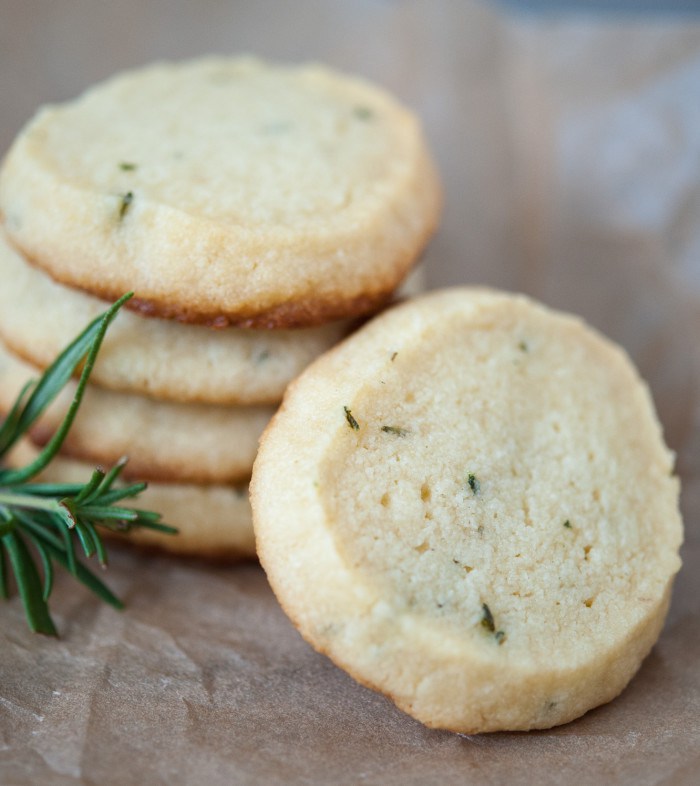
Rosemary Shortbread Funeral Cookies


“There's rosemary, that's for remembrance; pray, love, remember.”
- William Shakespeare (Hamlet: Act 4, Scene 5)

Have you ever heard of funeral cookies before? I hadn't before I started doing research for this blog, but it turns out that they have a very long, colourful history.

It would seem that the custom of eating food that had lain near the dead spanned several centuries, as it was believed that the food would absorb the deceased's best qualities, and that by eating it, one not only drew those qualities into themselves, but also incorporated part of their loved one into their own bodies forevermore. What a fascinating thought!

Although variations on this custom occurred throughout Europe from the Medieval period onward, it was during the Victorian era that culinary funerary traditions were taken to new heights... right down to the biscuits.

Rules about specified mourning periods and acceptable clothing colours were adhered to very strictly, and funeral etiquette demanded niceties such as memorial cards. These notices were handed out at the funeral service alongside cookies that were wrapped in crepe paper and sealed with black wax.


Not being a huge fan of sweet food, if I indulge in any kind of biscuit, it's usually a moderately savoury one. Shortbread is one of a scant few dessert-type things that I really enjoy, and I'm very fond of this gorgeous recipe for grain-free, Paleo rosemary cookies that I found on the Primal Palate website. Adding rosemary not only gives them a lovely herbal note, but is rather apt: rosemary has always been associated with remembrance.


“As for rosemary, I let it run all over my garden walls, not only because my bees love it but because it is the herb sacred to remembrance and to friendship, whence a sprig of it hath a dumb language.”
- Sir Thomas More (1478-1535) 

Ingredients: 

  • 1/2 cup (120 g) butter, softened
  • 3 tbs (45 mL) honey
  • 1 tsp (5 mL) fresh rosemary, minced
  • 2 cups (240 g) almond flour
  • 1/2 tsp (2.5 mL) sea salt

Preparation:

Mix together the butter and honey in a large bowl using a hand mixer, or pulse it together in a food processor.

Add the rosemary, almond flour, and salt, and mix well.

Shape the resulting dough into an 8-inch (20 cm) roll and wrap in plastic cling film. Refrigerate for at least an hour, or freeze to use later.

After thoroughly refrigerated, preheat your oven to 325° F (163° C).

Remove the dough from the plastic wrap and cut into 1/4 inch (6 mm) slices.

Place these slices on greased baking sheets, leaving at least an inch of space between them.

Bake for 15 min or until the edges begin to brown, and allow to cool for several minutes before carefully removing them from the pan with a spatula.


In addition to being excellent offerings at funerals and memorials, these can be given as gifts inside decorative tins, or even threaded through with black ribbon. Just use a straw to poke two holes through each one prior to popping the baking sheet in the oven, and once they've cooled, draw each end of a single strand of black ribbon through either of the two cookie holes as you stack them one on top of the other, and finish off by tying them in a bow.

Although I mostly stick to the AIP Paleo diet, I will occasionally use grain-fed butter for cooking or baking, and that's what I use when I make these biscuits. I haven't yet used Earth Balance or similar vegan butter substitute, but I would assume that doing so would work just fine, as I've used those for countless other recipes and had no problem whatsoever.
Similarly, one could likely swap out the honey for agave nectar or maple syrup.

However you choose to make yours, they go wonderfully with a cup of hot tea.


Lead photo is (c) The Primal Palate; origin of second image unknown (found on Pinterest with no attribution)

Saturday, 21 May 2016

Potato Salad for Easing Summer Sorrows


“Neighbors bring food with death and flowers with sickness and little things in between."
- Harper Lee

Preparing food to share with the grieving can be tricky in the summer months. Autumn and winter are ideal for hot, soothing soups, stews, and casseroles, but few feel like eating warm food when the weather is sweltering.

For my first offering here, I'm sharing my mother's potato salad recipe—the same one that nourished me after that first funeral I attended over 30 years ago. It's one of a few dishes that we've always been asked to make for family gatherings of all kinds, and so help me, as soon as we've heard bad news from anyone in our circle, someone gets the water boiling while another starts peeling potatoes.

It's a very simple dish, but one that's both comforting and nourishing on what seems to be a cellular level. You can double or even quadruple the recipe if you're preparing it for a memorial service buffet, or just make a single batch if you're delivering food to an individual or small family.

Ingredients:
  • 2 lbs cooked Yukon Gold or white potatoes (6 medium), cooled, peeled, and cubed
  • 2 hardboiled eggs, chopped coarsely
  • 1 green onion or 4-5 chives, thinly sliced
  • 1 tbsp shredded carrots
  • 1-3 dill pickles, minced (or as few/many as you like, depending on preferred pickle-y-ness)
  • 2 tablespoons white or cider vinegar, or brine from the pickle jar
  • 1 cup mayonnaise*
  • Salt and pepper
  • Paprika

Preparation:

Pour the cooled cubed potatoes into a large bowl and toss with vinegar. Allow to sit for a few minutes.

Add the chopped eggs, pickles, green onion, carrots, and mayonnaise, and toss to coat well.

Season with salt and pepper to taste, give it another good stir, and refrigerate until cool. Sprinkle with a bit of paprika before serving, if desired.


I don't have many true recipes per se, in that I don't have specific measurements for various ingredients and just sort of toss dishes together until they taste right. If you make this salad, please adjust it to your own tastes, as adding or changing ingredients can create some fabulous variations.

For example, if I'm just making this salad for my husband and I, I'll toss in a generous amount of chopped capers and minced fresh dill, whereas the version my in-laws make is packed with diced celery and white onion.


Adding some chopped fresh herbs like parsley, dill, chervil, or tarragon adds a bit more greenery and a higher nutritional content, and if someone is on a low-carb or paleo diet, you can also make this with a mixture of cubed cooked sweet potatoes, rutabagas, and turnips in lieu of regular potatoes.

For a vegan version, you can use Vegenaise or even pureed avocado, and omit the hardboiled egg.
Skip the paprika if someone is on the AIP diet or is otherwise nightshade free.


*My mother makes her potato salad with a 50/50 mixture of mayonnaise and Miracle Whip dressing, but that gives it a sweetness that some may find strange when paired with pickles and onions.